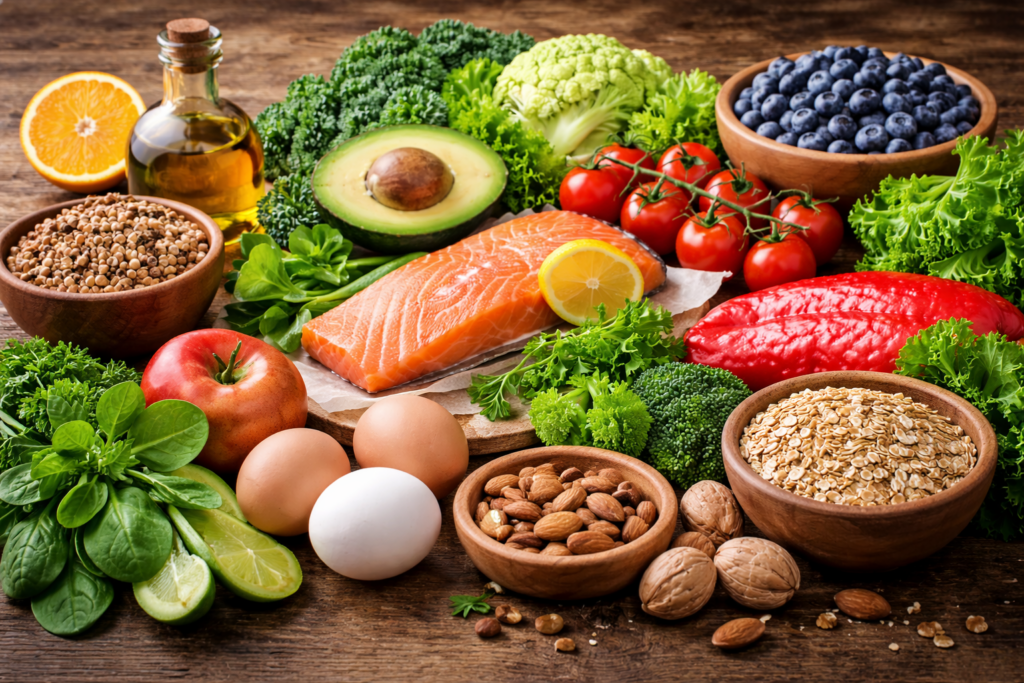
Nutrition is the foundation of natural health. At its core, the whole foods philosophy emphasizes eating foods as close to their natural state as possible — fresh vegetables, fruits, high-quality proteins, healthy fats, nuts, seeds, and minimally processed grains. The idea is simple: when you nourish the body with real food, it functions more efficiently.
Many natural health advocates focus on anti-inflammatory eating patterns. Chronic inflammation has been associated with a wide range of conditions, from joint discomfort to metabolic challenges. Diets rich in leafy greens, berries, omega-3 fatty acids, and herbs like turmeric are often promoted as supportive of balanced inflammation levels.
Organic food is another frequently discussed topic. Supporters argue that reducing exposure to pesticides and synthetic additives may benefit long-term health. While research continues to evolve, many consumers prefer organic options when possible, especially for produce known to carry higher pesticide residues.
Whole foods nutrition also prioritizes nutrient density. Rather than counting calories alone, the emphasis shifts to vitamins, minerals, antioxidants, and phytonutrients. This approach encourages people to think about food as fuel and information for the body — not just energy.
Ultimately, whole foods nutrition is about simplicity. Cook more at home. Choose ingredients you recognize. Focus on balance rather than extremes. For many, this return to basics creates sustainable, long-term improvements in energy, digestion, and overall well-being.