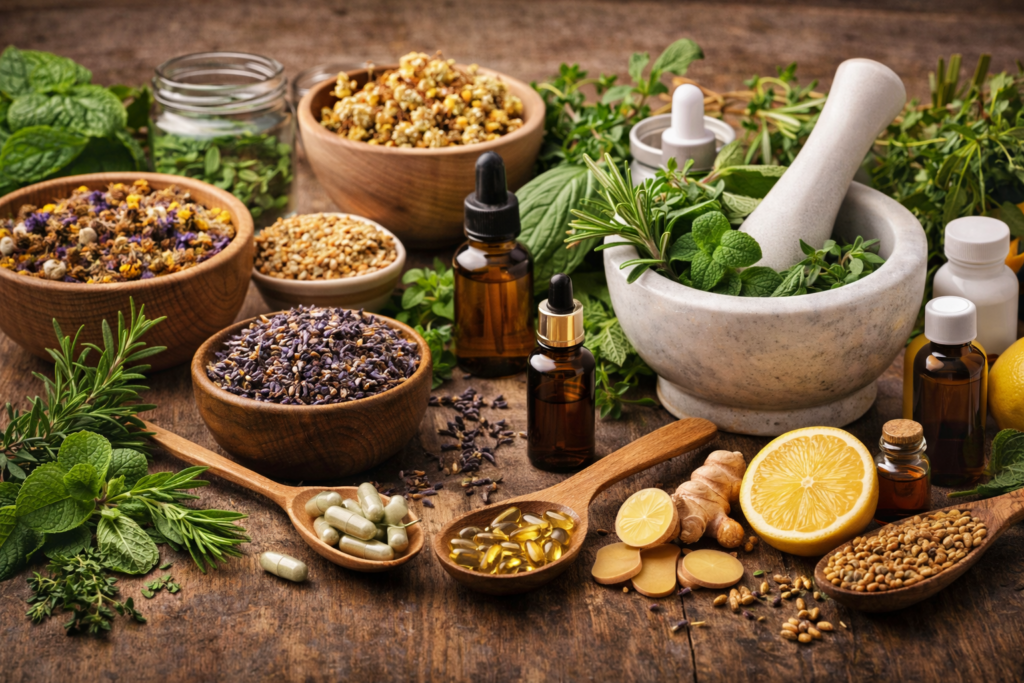
Herbal remedies have been used across cultures for thousands of years. Today, natural health communities continue to explore plant-based compounds as supportive tools for overall wellness.
Common herbs frequently discussed include turmeric for its anti-inflammatory properties, elderberry for immune support, and ashwagandha as an adaptogen that may help the body manage stress. Adaptogens are particularly popular, as they are believed to help balance the body’s response to physical and emotional stressors.
Supplements such as vitamin D, magnesium, zinc, and omega-3 fatty acids are also central topics. Many people turn to supplementation when dietary intake may not fully meet nutritional needs. However, quality matters. Natural health advocates often emphasize third-party testing, clean sourcing, and transparency from supplement brands.
Herbal medicine operates on the principle that plants contain complex compounds that work synergistically. Unlike isolated synthetic ingredients, whole-plant extracts may provide broader supportive effects. Still, responsible usage is key. Dosage, interactions, and individual health conditions must be considered.
Education plays a major role in herbal wellness. Consumers are encouraged to research thoroughly and consult qualified professionals when needed. When used thoughtfully, herbs and supplements can complement healthy lifestyle habits and provide targeted support for specific wellness goals.